
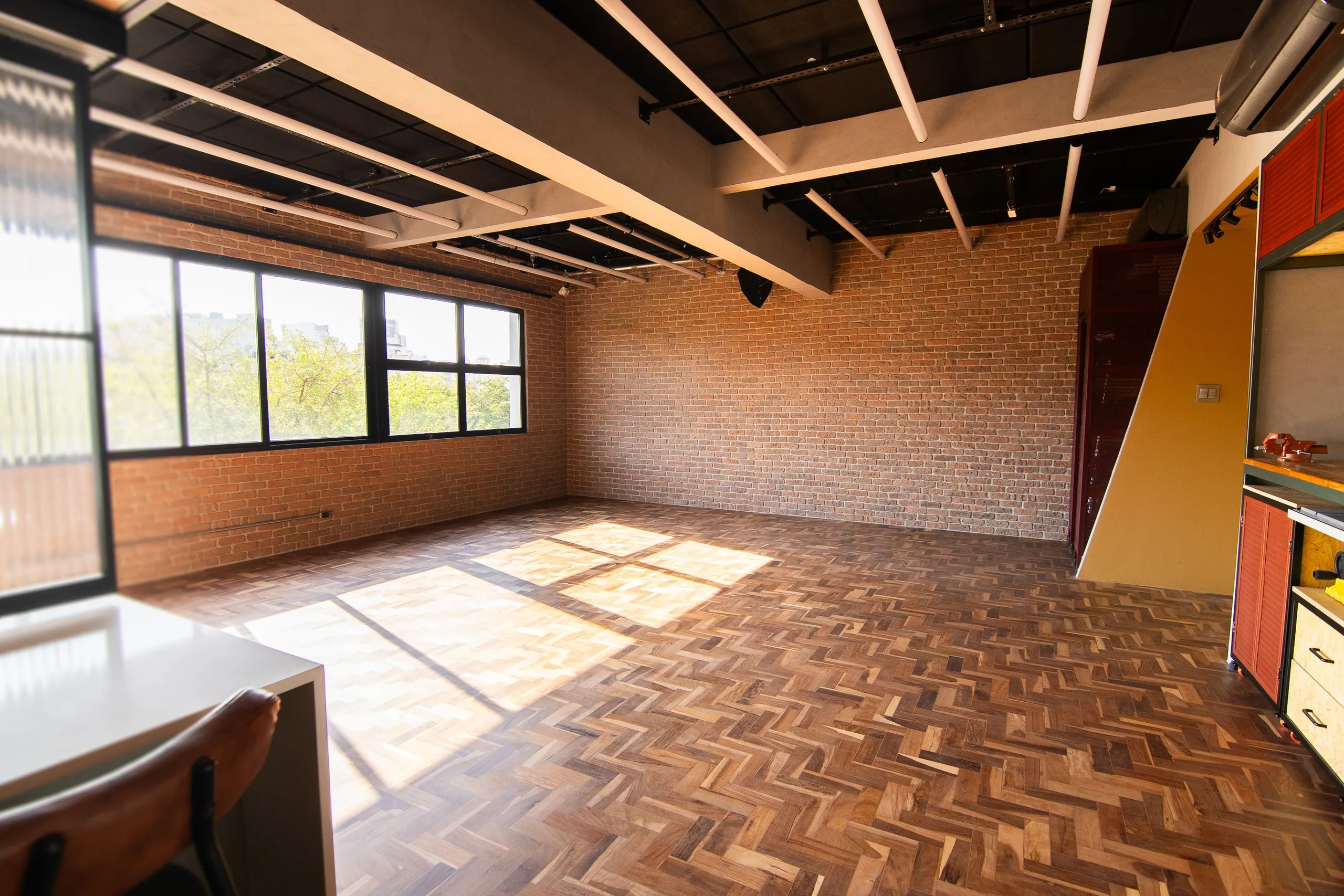
The window has a schedule too
Daylight changes shape all day long, and faster than memory records it. A studio has an orientation, and that orientation decides your day.
Here it is afternoon sun: it comes in around one o'clock and stays until it sets. By late afternoon it takes the whole space, and it looks very good. In the morning the sun sits behind the building, so the light changes less dramatically, because what arrives is already indirect.
The building across the street is what makes that difference, holding back the morning sun. On a cloudy day things get easier, because the light drops in intensity and stops changing direction. On a sunny day it is the shadow that travels, and the shadow is what the camera records.
Worth asking this at any location, in these words: what time does the sun come in, and where does it land late in the afternoon. It separates people who have shot in a space from people who have only seen the photo.
A long shoot asks for stability
Curtains have been closed here in the middle of a beautiful sunny day, for a simple reason: the light shifts a lot through the afternoon, and some shoots need it to stand still.
That tends to surprise people who chose the space for its windows. When filming runs for hours, the light that was perfect on the first shot has already changed angle by the third, and the material starts refusing to cut together.
Closing the curtain at midday looks like a waste and is the right call on plenty of projects. What you get is the ability to shoot at five something that cuts with what you shot at two.
People who love daylight keep loving it after this. The choice happens per project, and the same client may want both on different days.
The reference answers before taste does
The useful question has nothing to do with what you find beautiful. It is about the material: do the shots have to look like the same day, or does each one live on its own?
If they have to cut together, you need control, because the light will move while you shoot. If each shot lives alone, the travelling sun becomes variety instead of a problem, and the window delivers a quality that equipment imitates with difficulty.
Answering this before the recce keeps taste from turning into a rule. Some projects gain from the moving sun, and some need to repeat exactly the same frame after lunch.
Creators with less experience in cinematography often love daylight, and fairly so: it looks good on its own, with nobody rigging anything. What changes the game is the length of the day.
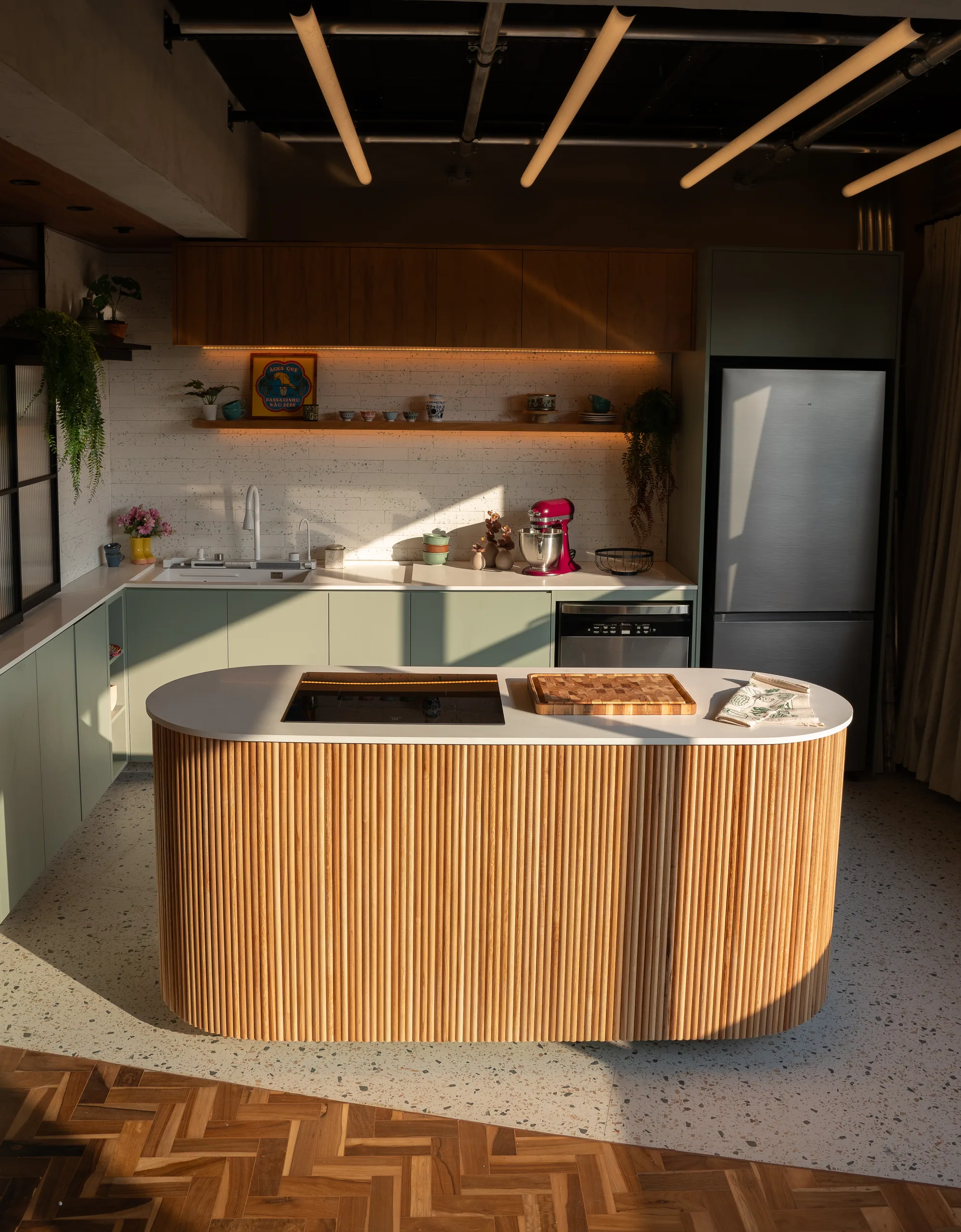
Control and daylight live in the same room
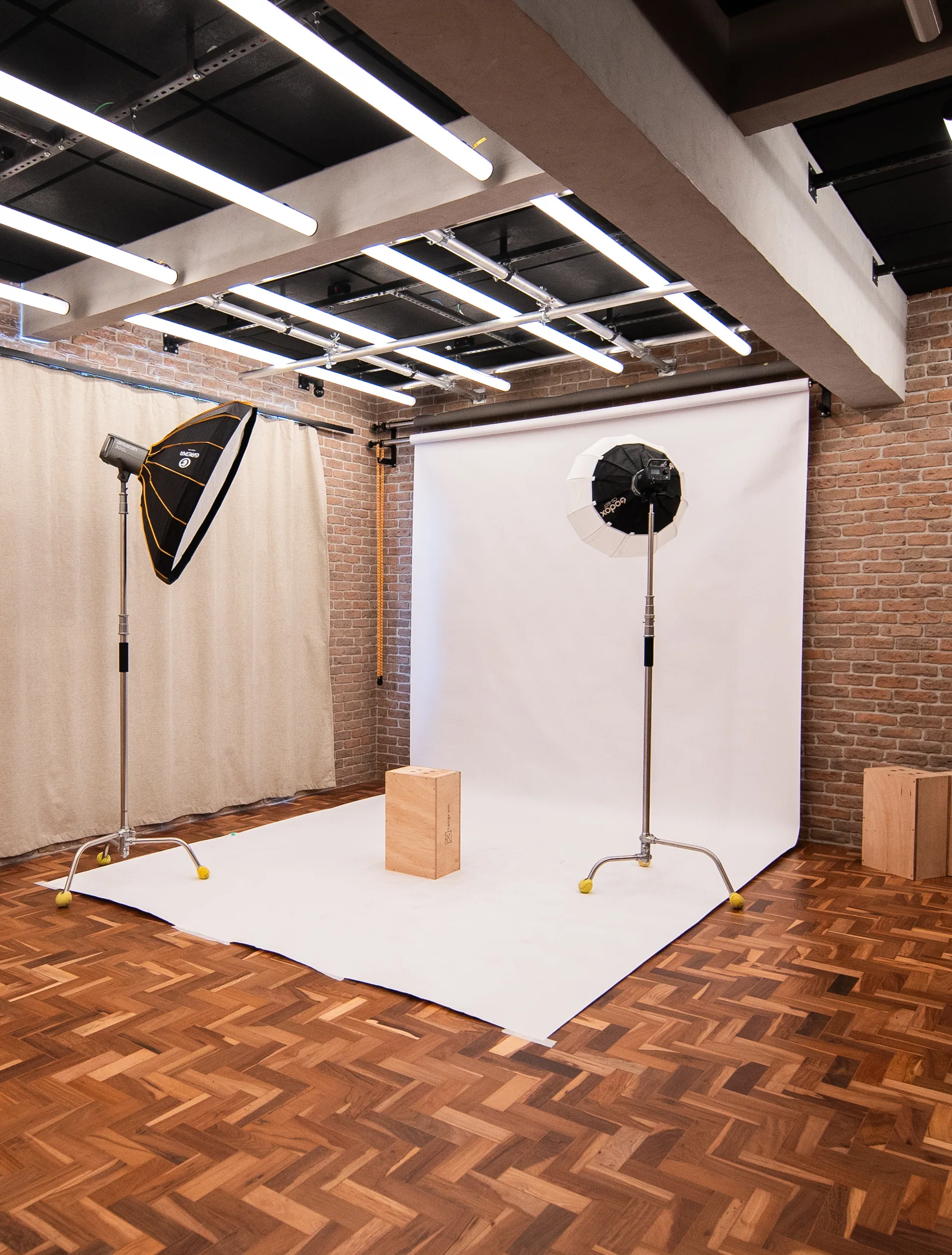
A well-resolved space offers both and lets you choose on the day. Blackout to shut it down, a ceiling grid to rig from, and power where the crew needs it.
The grid sits on the ceiling for operational reasons: it keeps stands out of the way, which frees up circulation and cleans the frame, and it makes life easier for electrics, who stop running cable across the floor and negotiating space with the rest of the production.
Worth checking what already comes with the space. Trestle tables and chairs, for instance, are usually things a production company hires and hauls in; when they are already there, they leave your logistics and your budget.
The question to ask on the recce is where the crew can rig without blocking the room's operation. A place can have grid and blackout and still force you to rig right in the middle of the walkway.
Four questions before the technical recce
Half an hour of recce pays off or does not depending on what you looked at before walking in. These four questions settle most of the lighting question.
None of them requires you to have a lighting plan already. They exist precisely so you can decide before cinematography is locked.
And bring the reference with you, on screen, exactly as it is. A conversation about light gets much faster when both people are looking at the same image instead of trading adjectives.
- Do the shots have to look like the same day, or does each live alone?
- How many hours of filming, from the first shot to the last?
- What time does the sun come in here, and what exists to shut it out?
- Where can the crew rig without blocking the flow of the set?
To close
The expensive mistake here happens before the shooting day, when somebody picks a room from a late-afternoon photo and only then finds out they will be filming from nine to six. The photo was accurate; it showed twenty minutes of a whole day.
Looking at the reference first settles most of it, because it already tells you whether your material survives a travelling sun. When it does, the window works for you all day for free. When it does not, a curtain closed at two in the afternoon is what saves the edit.