
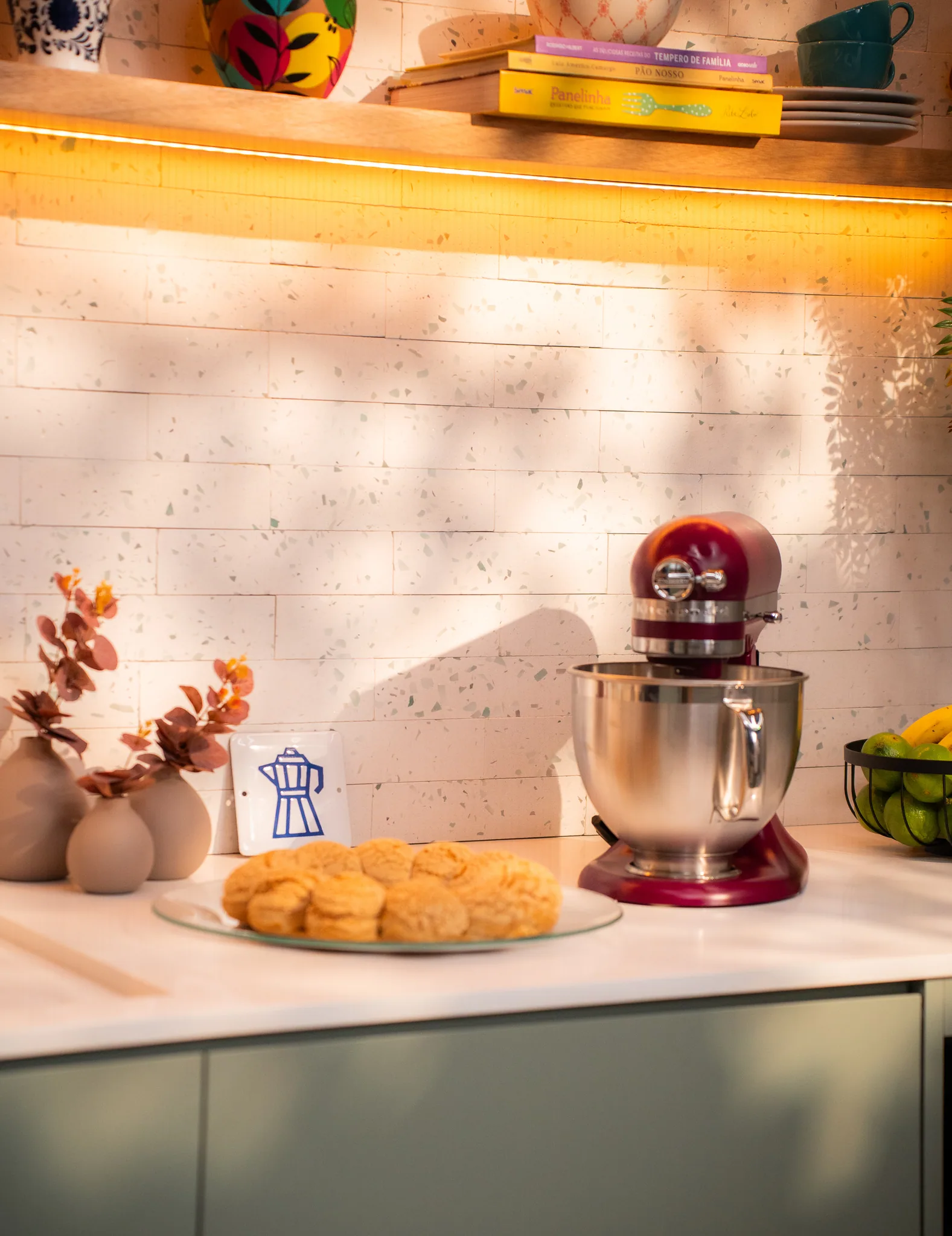
The bottleneck appears once the camera is on
Almost everyone manages to finish the prep. The squeeze comes during the shoot, when the dirty pan, the used board and the utensil that has done its job have nowhere to go.
They end up on the floor or in the next room, and every one of those trips costs time and breaks the rhythm of the set. Add half a dozen of them and you have lost an hour without any single one looking like a problem.
That is why the sentence we hear most from people arriving from another location is this one: it is so practical to shoot here, everything is already in place. Whoever says it spends the year building sets in rented houses, and knows by heart what a kitchen built for living in is missing.
The practical answer is support space built to the size the project asks for, so only what belongs in shot stays on the counter. Worth asking on any technical recce, including at the handsome holiday rental that looked like it solved the problem for half the price.
The kitchen has to actually cook
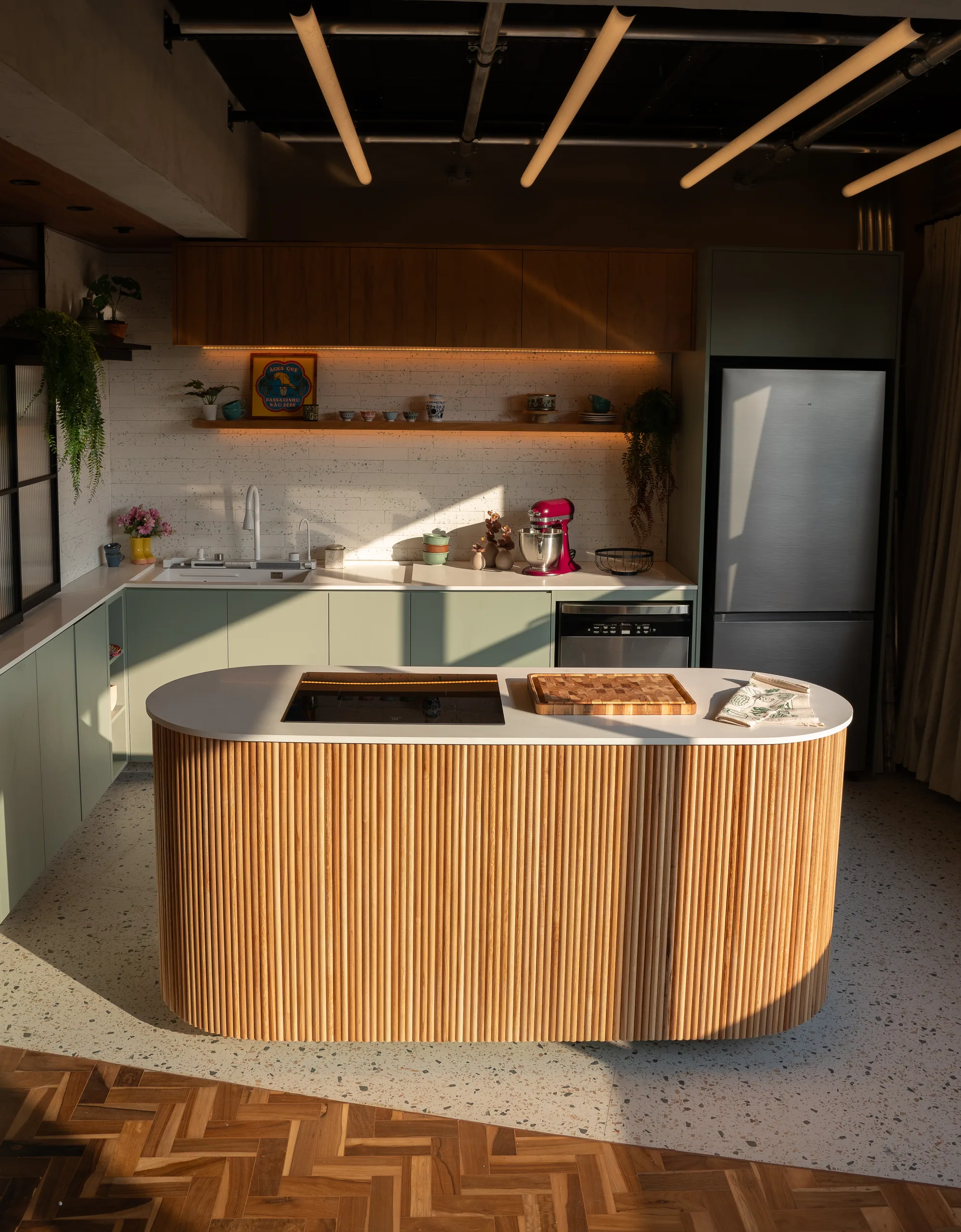
A scenographic kitchen works when the dish arrives finished and the set only needs the final frame. Once there is preparation, steam, frying or a change of recipe, what works matters as much as what shows.
The questions that separate the two are very concrete. Does the oven work? Does it have grill and convection, or one slow element? Is the cooktop induction? Is there a fridge and freezer of useful size, or only a prop? Can the crew use all of it during the shoot, or is the arrangement to look and not touch?
Ask about available power too. An oven, a cooktop and a lighting kit in the same room add up, and finding that out mid-shoot costs more than asking beforehand.
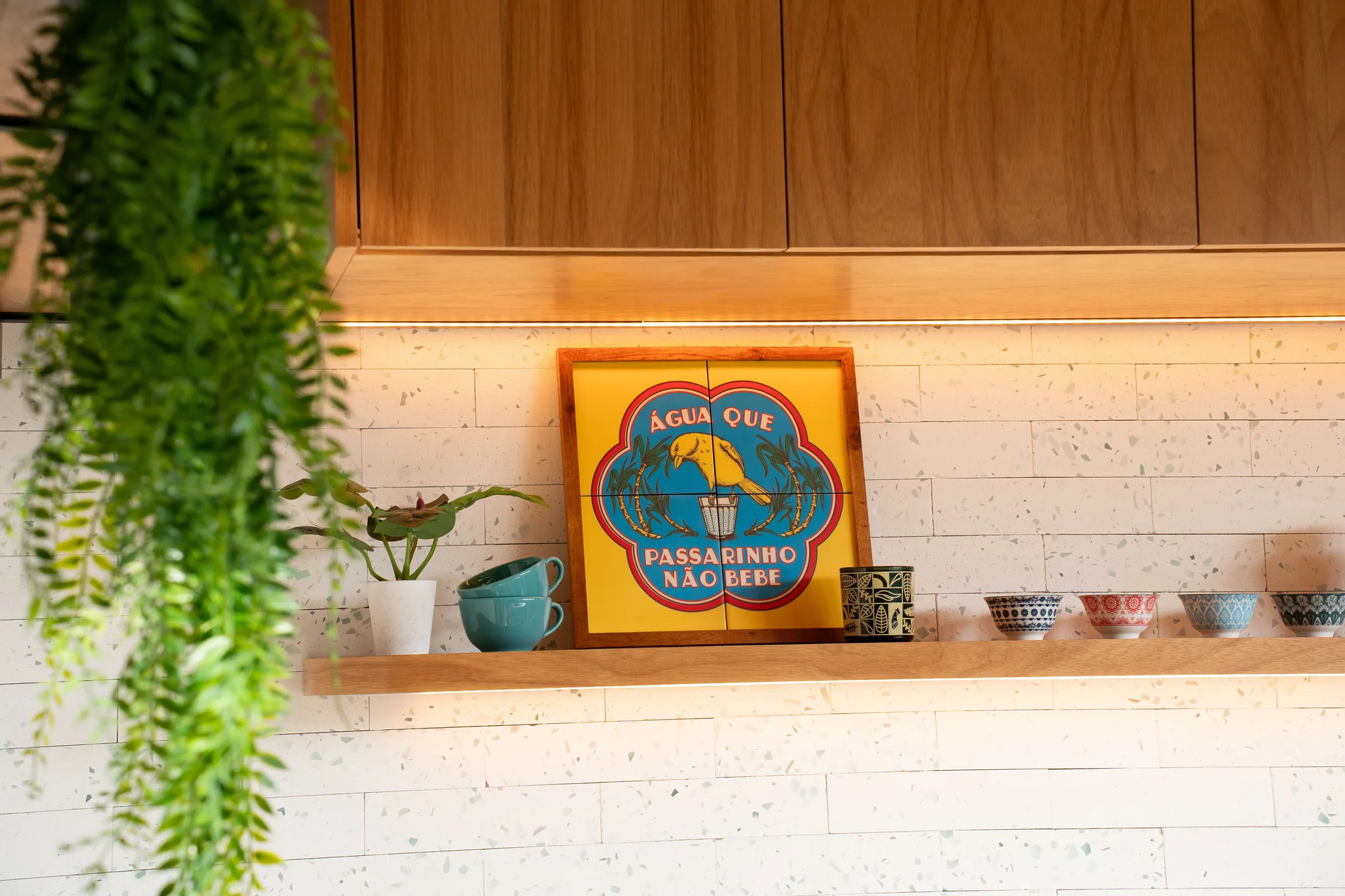
Ask whether there is a props collection. Having crockery and utensils on site saves the production from carrying cases, though it is worth confirming the rules: here, for instance, props are flagged twenty-four hours in advance, which only works for someone who has already broken down the scenes.
The maths is volume times preparation time
How many preparations go into the day, and how long each one takes with hands actually working. That calculation decides whether the project fits in one day, two or five.
To do it, take out of the recipe every stretch where nobody is working: oven, freezing, dough resting. What remains is the real preparation time, and that is what goes into the sum.
Add roughly twenty minutes of reset between one recipe and the next, which is the time it takes to turn the counter around for the following item. It looks small per recipe and becomes a full hour across the day.
As a conversation reference, a shooting day tends to hold three to four recipes when the production arrives with things pre-made. It is a support estimate to calibrate expectations, never a promise of output: in cooking everything is relative, and the number moves with what each preparation demands.
Swap-outs are what guarantee the volume
Here the term is pula-passo: having a plate ready at every stage of preparation, waiting to replace on camera whatever is still being made. It is the word you actually hear on set in Brazil.
With mise en place and swap-outs ready, the day runs at around twice the preparation time. With swap-outs ready and mise en place still to do, count on three times. The gap between those two numbers is one person chopping onions before you arrive.
You can shoot with no swap-outs at all, alternating tasks while something is in the oven, and it is considerably harder and slower. That is why the rule starts at three, with no line for arriving with nothing ready.
When the project calls for it, there are people who do this professionally: a culinary assistant for the preparation and a food styling partner for utensils and set. They exist so the time spent inside the studio is only the time that has to be on camera.
The support kitchen, and the time it takes to clean
Once you have looked at the main counter, ask about two things that stay out of the photo: whether there is a support kitchen, and how cleaning works at the end of the day.
A support kitchen on restaurant lines is rare in a studio, and the honest answer almost always comes with a caveat. Here there is a small pantry and a support station with an induction cooktop, which handles parallel preparation without replacing a second full kitchen. Knowing that beforehand changes where the heavy prep happens.
When the recipe needs a lot of advance work, the usual route is doing the mise en place elsewhere and arriving with things ready, which is the same move swap-outs ask for. When the prep has to happen on site, the question becomes how much counter will be taken up by what never enters the frame.
And ask who cleans, and when. Here the kitchen is handed back clean by the production, with no separate cleaning fee, and the cleaning happens inside the booked hours: that is why the kitchen in food use has a two-hour minimum. A day that ends at six with a full counter does not end at six.
Beautiful light still has to be controllable
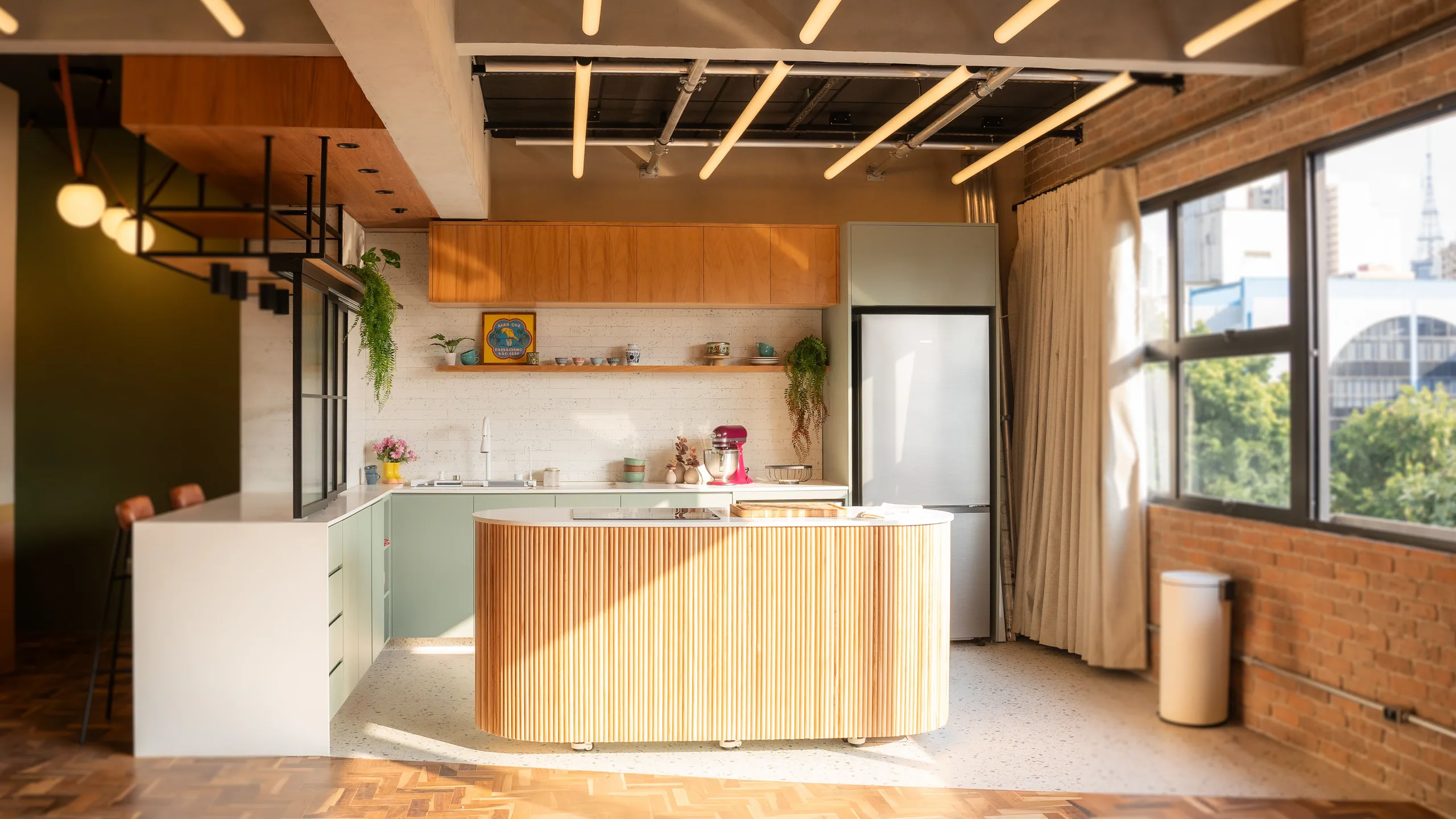
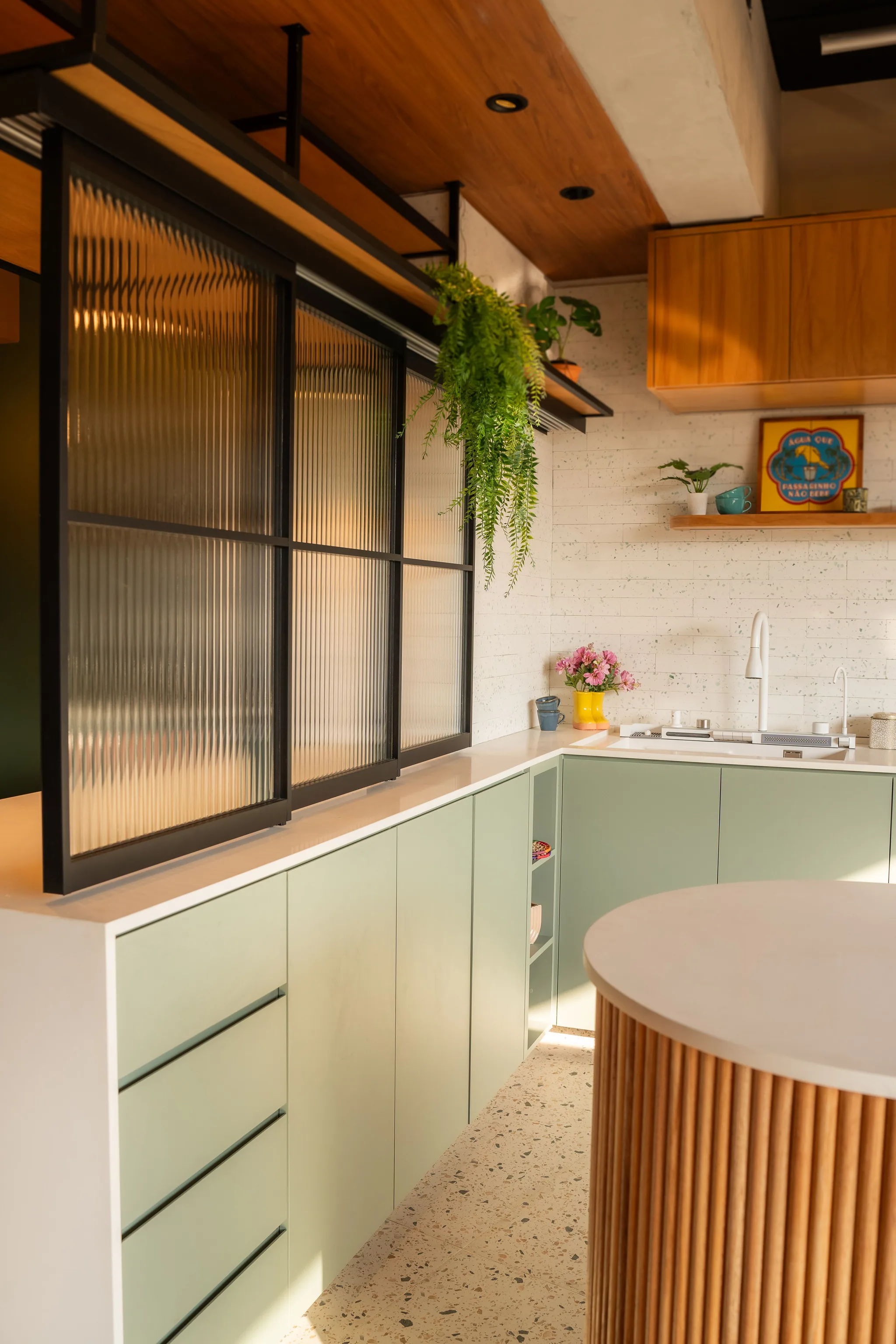
A big window helps a lot, especially when the frame wants a natural look. The sun moves, though: here it comes in around one in the afternoon and by late afternoon it fills the whole kitchen.
On a four or five hour shoot that shows up in the material. The shot you filmed at two and the one you reshot at five may not cut together, and the fix either happens in post or does not happen.
So blackout and grid stay on the recce list even when daylight is the reason you chose the place: one shuts the window, the other holds whatever takes its place. You can have the window and still need to shut it at four in the afternoon, so the last shot cuts with the first.
Bring the reference, look at which way the windows face, and ask where the crew can rig without blocking the kitchen's operation. The visit pays off far more when the framing has already been thought through.
- Where do dirty dishes go during the shoot, without stopping the set?
- Which appliances can the crew genuinely use, and on what power supply?
- Is there a crockery and props collection, and how far ahead is it requested?
- What time does the sun come in, and what exists to shut it out?
- How many people fit comfortably, counting client and agency?
To close
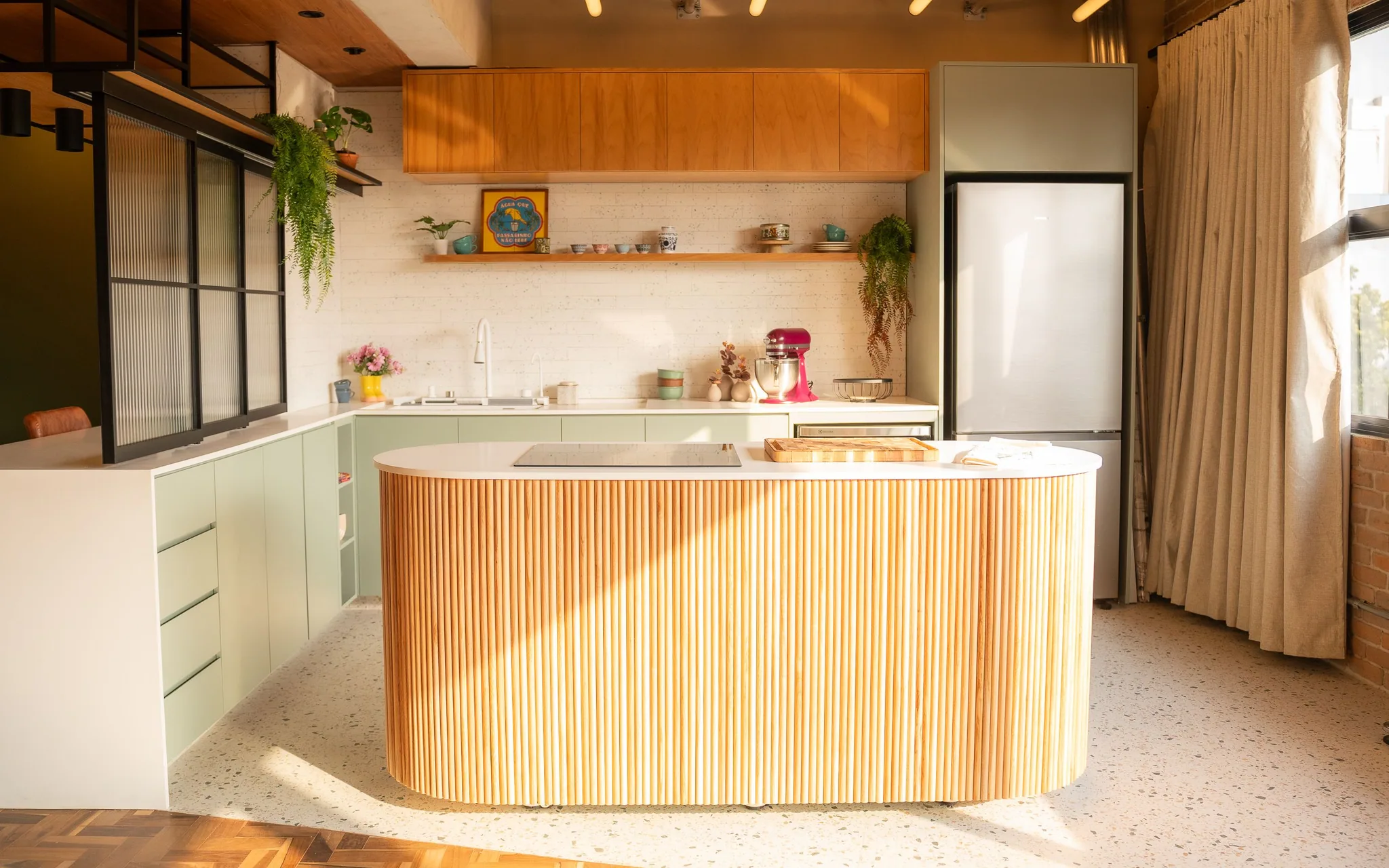
Put the questions in this piece together and notice where they land: where the dirty dishes go, how long each preparation takes, who cleans at the end, what time the sun turns. Almost none of them is about the counter, which is exactly the part that shows up in the listing photo.
On the recce that becomes a quick test. Picture the third recipe of the day, at three in the afternoon, sink full and the crew already tired: the kitchen that still works at that hour is the one that serves your project. The others serve the first recipe, and the first recipe was never the problem.