
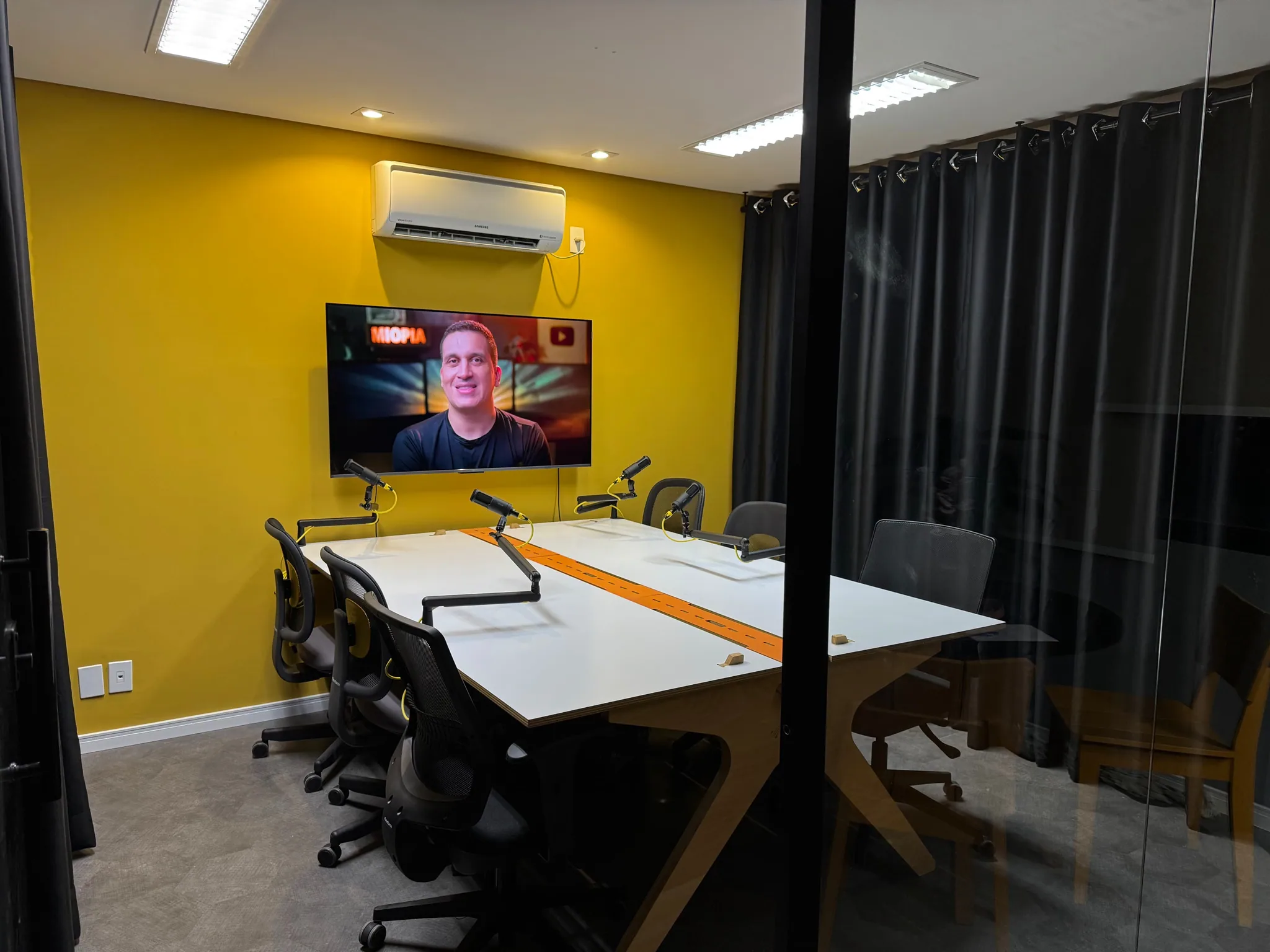
The subject decides before the furniture
People who ask which room to use are usually asking about furniture, and the answer comes from the episode. Armchairs and tables produce different conversations because they seat people differently.
Start with the episode: will the guest bring data, a spreadsheet, a slide, a product in hand? Is it an interview with questions and answers, or a conversation that needs to wander a little to get good? Are there four people or two?
After that the room almost chooses itself. Picking the good-looking set first and then trying to fit the conversation into it is the route that tends to produce a tidy, lifeless episode.
Worth saying the decision is not permanent. Formats change between seasons, and the same brand often records a technical interview one month and a long conversation the next.
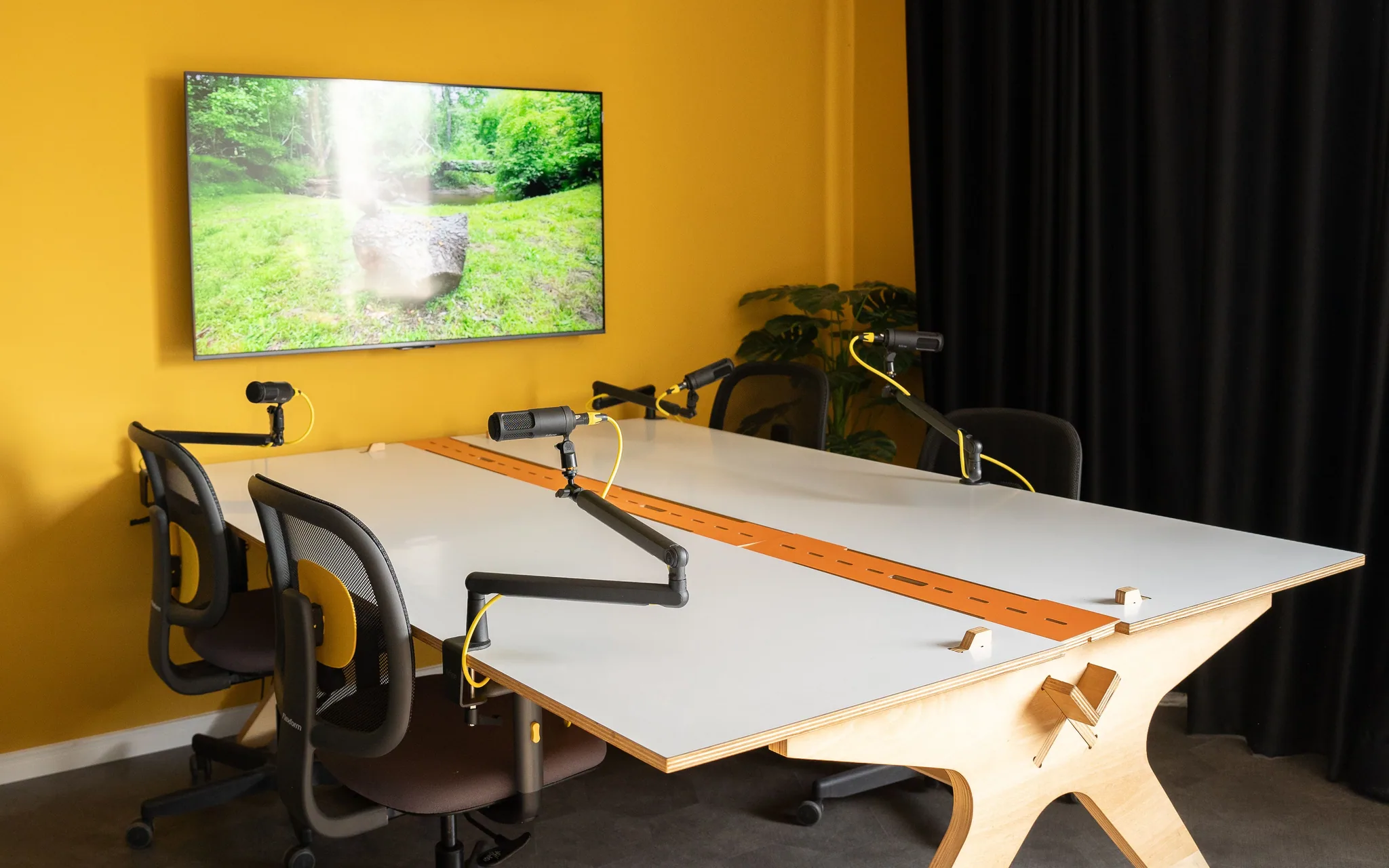
A table organises the encounter
A table gives you somewhere to rest notes, a running order, a glass and whatever else needs to be within reach. It also organises turn-taking, because everyone has a clear position and a microphone in front of them.
It is the format that usually works better with more people. With four in conversation, the table gives each one a defined place, and that shows up in the edit: it is easier to tell whose turn it is without the cut having to explain.
It also holds up better for episodes that depend on material. If the guest is showing a product, opening a document or checking a note, the table lets that happen without breaking the frame.
What a table charges in return is a certain formality. It creates physical distance between the participants, and that distance reaches the audience: you can see it in posture, eye contact and the pace of the conversation.
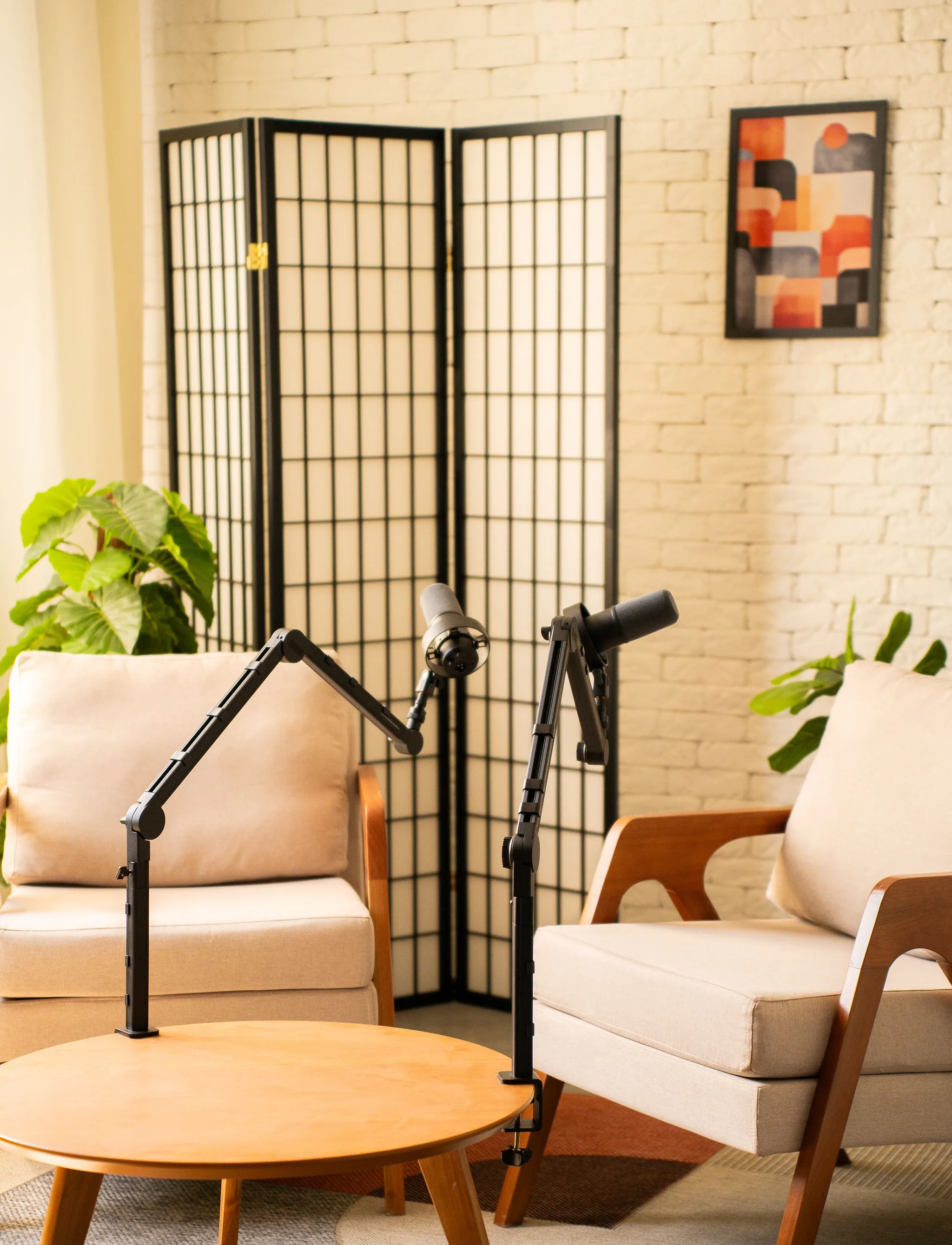
An armchair changes the body, and the conversation follows
The idea came from coffee at someone's house. You know when a friend drops onto the sofa and everyone relaxes? The armchair room exists to reproduce that in front of a camera.
People loosen up, answers get more room and the discussion can go deeper. When the subject is less technical and depends on somebody opening up, taking the table out of the middle changes the result more than any lighting adjustment.
In exchange it charges the opposite of what a table charges: with nowhere to rest anything, whoever depends on notes ends up with full hands and a running order in their head. For an interview with many written questions, that weighs.
Both rooms here hold up to four participants, so the number of people rarely decides between them. What decides is the kind of conversation you want to hear in the finished episode.
What to ask beyond the furniture
The set shows up in the photo and the sound shows up in the episode. The part of the room that decides whether the material is usable is exactly the part that does not photograph well.
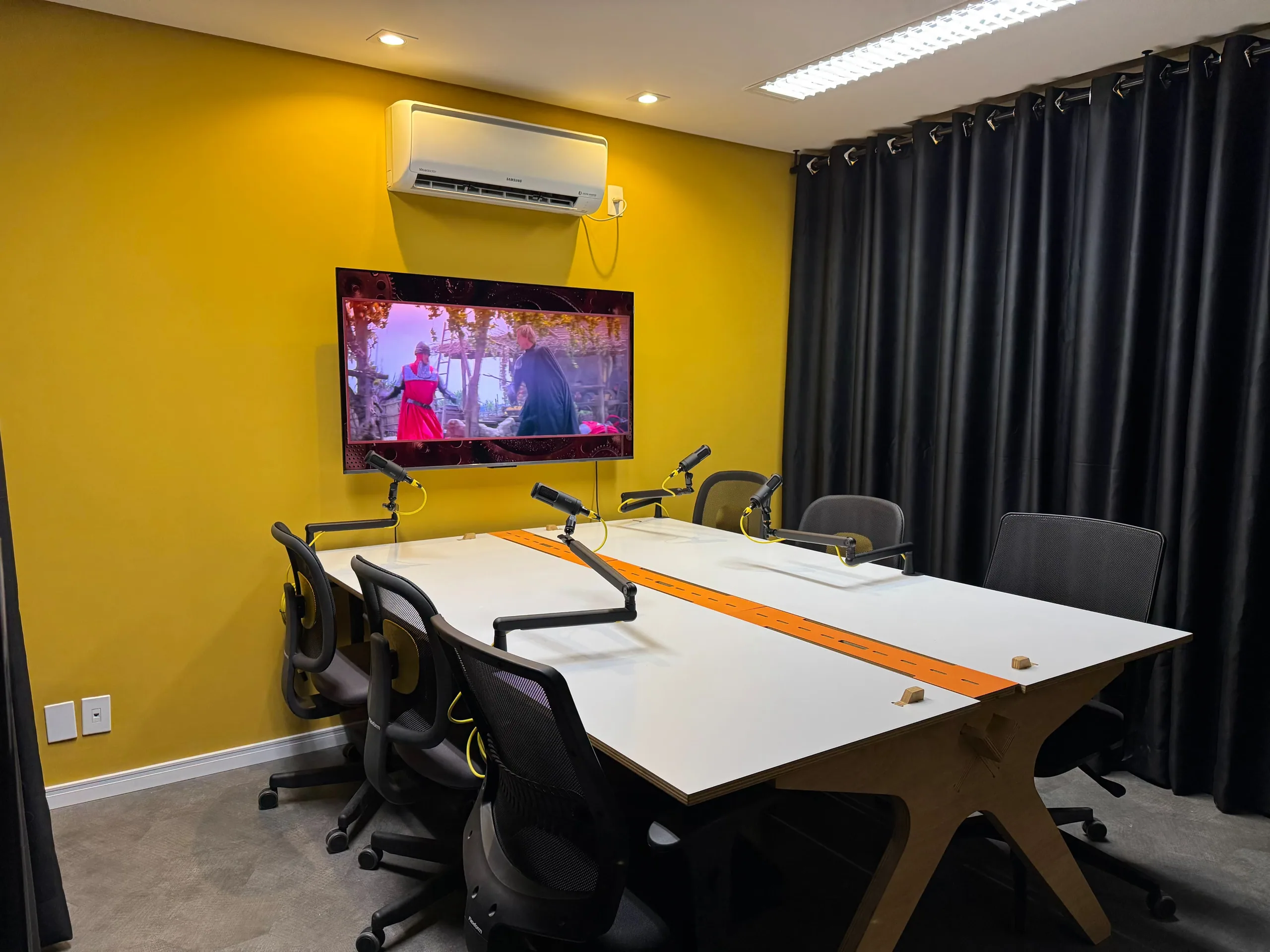
Ask how many cameras stay rigged and how many microphones the room takes. Here it is three cameras and up to four microphones, arranged around the format, and it matters because a four-person conversation on two microphones becomes an editing problem nobody solves afterwards.
Ask about acoustic treatment, and listen closely to the answer. A good-looking room with an echo delivers an episode that tires people, and audience fatigue shows up in view time before it shows up anywhere else.
Ask what happens before recording too. Having somewhere to gather crew and guest to settle the last details changes the first block of the episode, which is usually the hardest one.
The finished episode starts before REC
Much of what you will publish later is already decided on the day of the recording. Clips for social especially depend on things that have to exist while the camera rolls.
If the plan is to pull vertical clips out of the episode, that changes the framing you ask for from the start. A tight shot that works in landscape may not survive the crop, and finding that out in the edit means losing the best moment of the conversation.
Add to that separate audio per participant. It is what lets you fix one line without touching the whole episode, and asking for it while the set is still rigged takes two minutes.
Arriving with a list of moments you want to turn into clips helps too. It does not have to be a script; it is enough to know which questions are likely to produce the thirty seconds that will travel.
- Does the episode have material to lean on, or is it free conversation?
- How many people are sitting down, counting the host?
- How many microphones does the room take, and is audio recorded per person?
- Will you pull vertical clips later? Ask for the framing beforehand.
- Is there somewhere to align with the guest before the camera is on?
To close
Tables and armchairs solve different conversations, and neither of them fixes an episode that did not know what it wanted to say. Choosing the room comes after deciding the kind of conversation, which is why it tends to be easy once its turn arrives.
People who choose the other way round tend to notice mid-recording. The room was booked before the format changed, and the furniture starts deciding things nobody decided: who speaks first, how much room each answer gets, whether anyone can stretch out in their seat once the conversation gets good. Five minutes thinking about the episode are worth more than half an hour choosing where to record.