
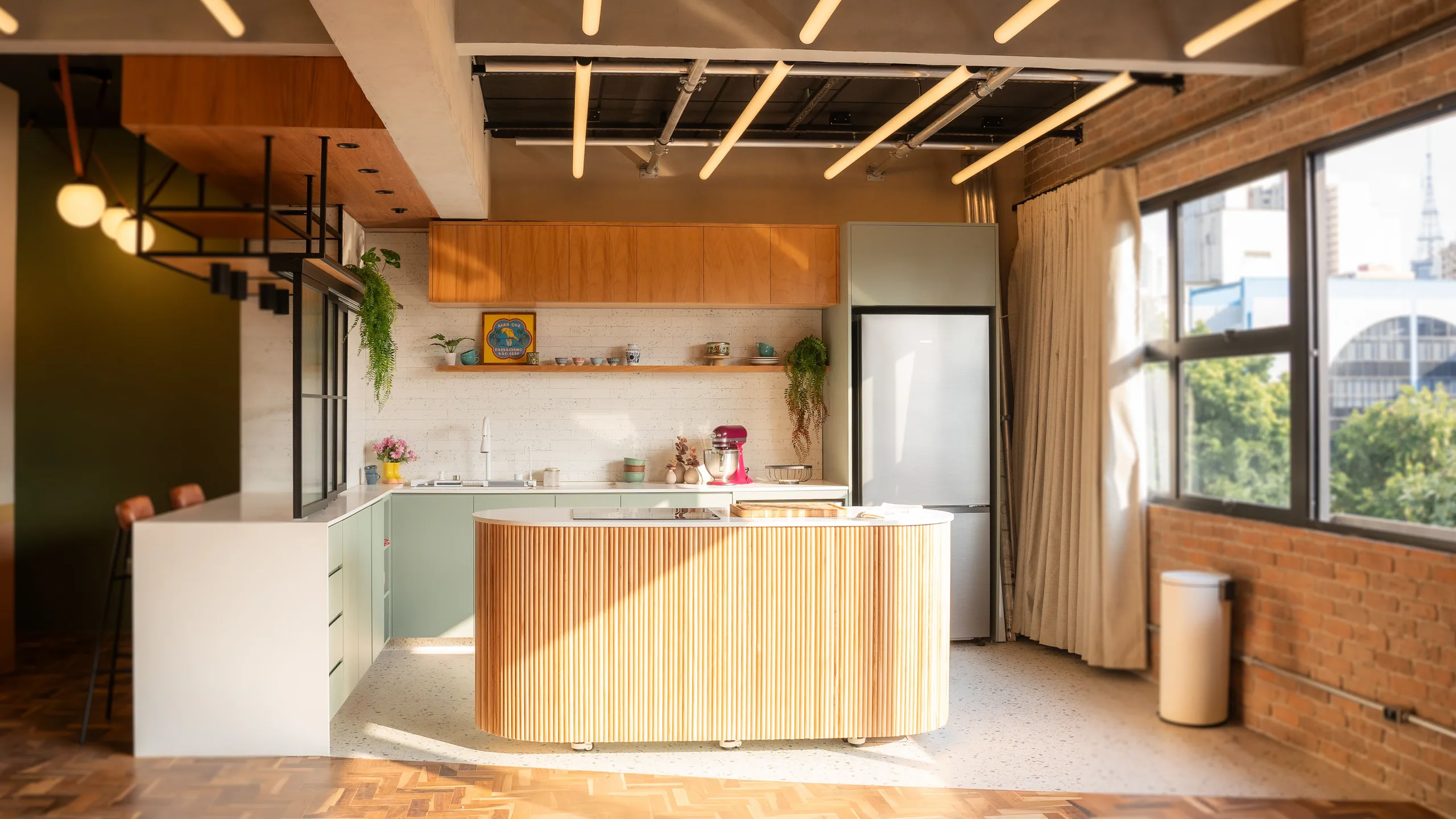
Cooking for camera is a different job
You chop the onion the way you always do, turn up the heat and vanish from frame for two minutes stirring the pan. In the final cut nobody sees either one: the camera only catches the crooked cut and your back.
Cooking for yourself, nobody minds if the onion comes out uneven, if the bowl is whatever is closest, or if you stir the pan looking at the stove. Cooking for camera changes the rule: the cut has to look good because it will show, the ingredient has to sit in the right container because the container shows too, and the way you season, stir and plate has to work in frame, not only in flavour.
Every one of those visual requirements eats time that cooking at home never asks for. A careful cut takes longer than any cut. Switching to a bowl that matches the shot takes longer than grabbing whatever is closest. Multiply that by every step of the recipe.
The recipe stays the same. What changes is the time it takes to make each step presentable, stacked on top of it, and that time gets spent one of two ways: before the camera rolls, or with it rolling, stopped, waiting.
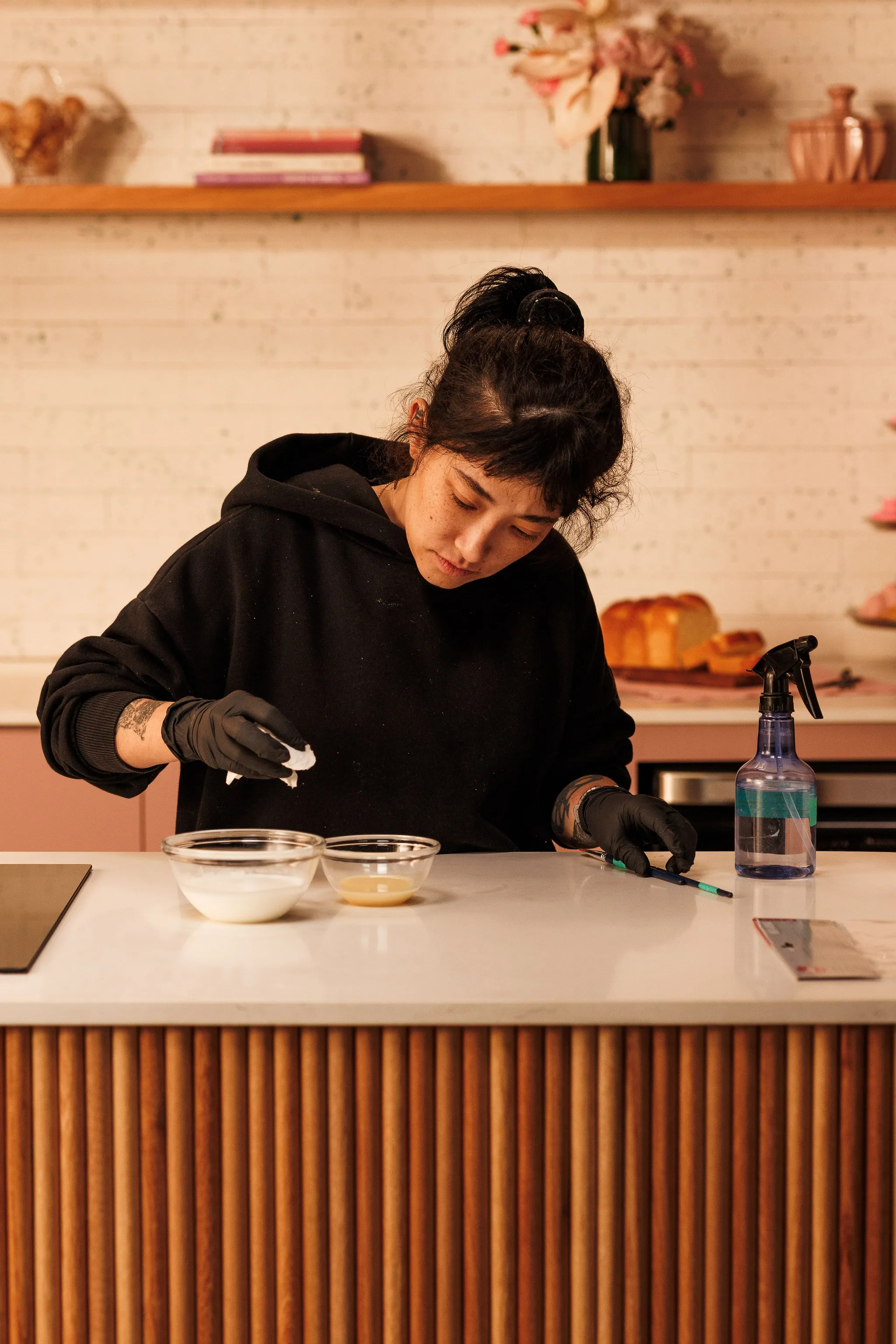
Mise en place is the name for this
Mise en place means separating, cutting and organising everything before you start shooting, so the time with the camera rolling gets spent only on what will show.
In a restaurant kitchen, mise en place exists to keep up with service. On a shoot it exists for a different reason: cutting nicely, sorting into the right containers and setting the order of use are jobs that do not need to happen with the camera on, and every minute spent on them there is a minute that does not go toward the actual footage.
In practice: chop, weigh and sort every ingredient into the container that will show, and get the counter arranged the way it needs to look on the first cut. All of that before you hit record, not after.
That is why a twenty minute recipe at home can take up two hours on the counter during a solo shoot. The recipe stays the same. The extra time is the time it takes to make each step presentable, stacked on top of it.
Swap-out is the word you hear on set
The finished dish that replaces whatever is still in the oven, the fridge or resting, ready to step into frame without anyone waiting on it, has a name here: pula-passo.
Making one is simple: cook the recipe one extra time, or set aside a finished portion from an earlier test. Keep that dish ready in the fridge, out of the camera's angle, and bring it in at the exact cut where the real recipe would have reached that point.
Some steps cannot be moved forward: the cake bakes for as long as it bakes, the dough rests for as long as it rests. Without a swap-out ready, shooting alone means stopping the shoot, waiting out the forty minutes in the oven, and only then picking back up. With a swap-out ready, the camera keeps rolling: the stand-in dish steps into the place of whatever is still waiting.
To whoever is watching, both versions are the same recipe, at the same moment. The difference stays entirely on your side of the camera.
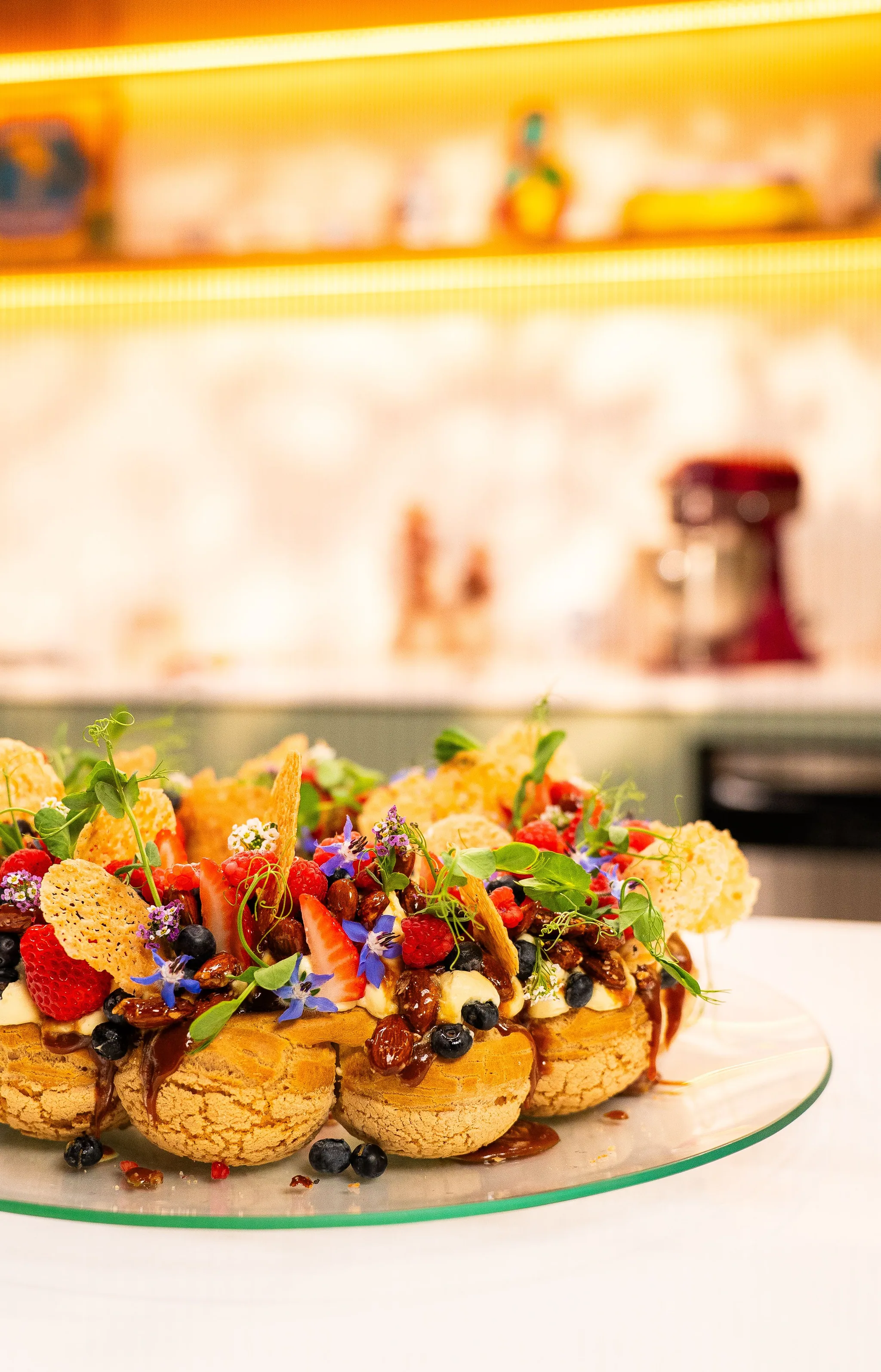
What you can move forward, and what you cannot
Not everything can happen beforehand. Whatever the camera needs to catch live, like dough rising or the first cut into a finished cake, still happens in the moment, and that is exactly why the rest has to be ready ahead of it.
You can move forward almost everything that is prep: chopping, weighing, sorting into containers, getting each portion to the exact point it needs to enter frame. You can also prepare a swap-out for every stage the frame is going to ask for later.
You cannot move forward whatever is the actual reason for the shoot. If the video is about whisking the batter, whisking the batter has to happen live, or there is nothing left to show.
When a project grows and there is someone dedicated to each front, one person on the prep and another on whatever shows up behind the dish (what the profession calls food styling), both things run at once. At Espaço Híbrido that exists as a crockery collection and art partners, but the logic holds in any kitchen: one person handling the prep, another handling what the camera will see.
The quick test before the camera rolls
Four questions decide whether a recipe will hold up on a solo shoot, before thinking about any piece of equipment.
Whoever answers all four before starting spends camera time only on what will actually show. Whoever does not usually finds the answer at the worst possible moment: mid-shoot, dish going cold, clock running.
- What needs to look good in frame, and what just needs to exist?
- How much of this prep can happen before the camera rolls?
- Is there a step that only waits, like an oven, a fridge or resting time, with no way to speed it up?
- Is there a swap-out ready to cover that wait?
When the swap-out is not worth the trouble
A cold dish, a one-step recipe, a sandwich assembled on the spot: not every food shoot goes through dead time that needs covering.
The rule is simple: if the dish never changes state (it does not bake, chill or rest), there is no wait to cover. Making a swap-out for it is extra work that does not solve anything. Mise en place alone, done well, already handles the whole problem.
The sign that it is worth it runs the other way: any recipe that goes through an oven, a fridge or a resting time while the camera could be shooting something else. That is real dead time, and a swap-out ready to go is what keeps you from spending it waiting.
To close
Cooking for camera takes longer than cooking alone at home, because the cut, the container and the gesture also have to work in frame. Mise en place moves that time before the camera rolls. The swap-out covers the time that cannot be moved, the time that already belongs to the physics of an oven or a fridge.
Whoever shoots alone learns this recipe by recipe, usually spending more time than they should the first few times. Knowing what to move forward and what simply waits changes the whole day: the camera only rolls for what actually needs to be filmed.